 Photo by Ana Palma
This summer, the Trump administration’s strict scrutiny of visas forced some Seattle event organizers, like STG and the Freakout Festival, to cancel shows. This fact adds gravitas and impetus not to miss the upcoming performance of international star contemporary flamenco dancer Rafael “Rafa” Ramírez from Madrid, Spain. Ramírez will perform Crónica de un Suceso (Chronicle of a Time that Was) on Friday, October 24 at Bellevue’s Meydenbauer Theatre.
The show is an homage to iconic flamenco dancer Antonio Gades (1936-2004). Gades popularized flamenco on the international stage with works including dance adaptations of Prosper Mérimée’s Carmen and Federico García Lorca’s Blood Wedding. But more, Gades blazes in audiences’ memories for his visionary style. It is his potent expressive ability that Ramírez reveres, he tells me in a recent conversation over Zoom.
[Gades] was forward of everybody else…he went to places that nobody was reaching yet…Even though he was a dancer from the past, he was very contemporary for his time.
Ramírez continues that Gades is also known for making his political and cultural “opinions clear through dance”. Most notably for Fuenteovejuna which is based upon an 1476 uprising in a Castile village of the same name. The villagers overtook their commander who mistreated them and even under torture would only say that the “village” did it.
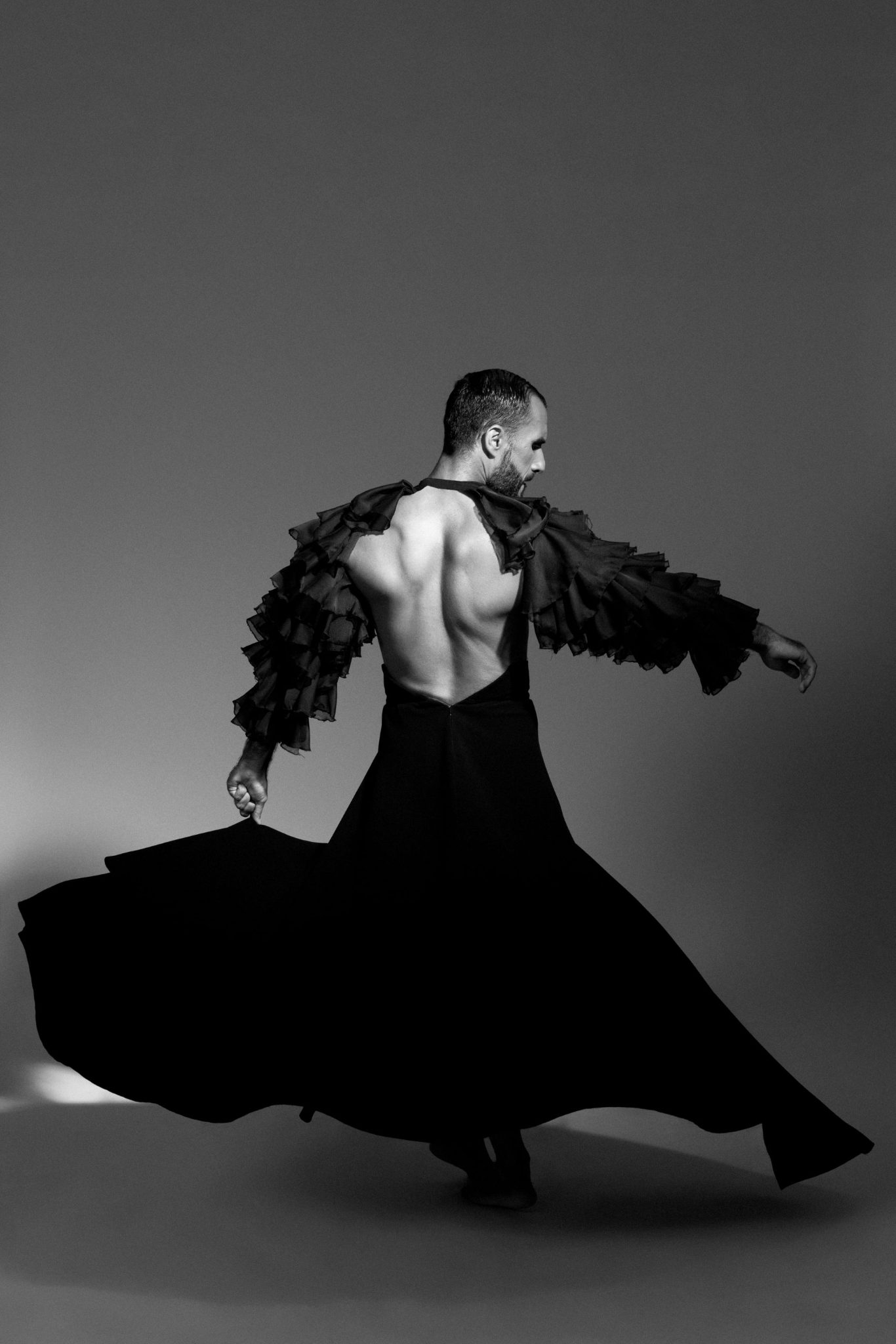 Photo by José Antonio Fernández de Córdoba
It is the way that Gades used flamenco to cross barriers and communicate the unspoken but palpable zeitgeist that inspires Ramírez. And Ramírez’s work is succeeding according to critics at the renowned Jerez Flamenco Festival who awarded him Best New Artist for his avant-garde embodiment of Gades in Chronicle. This award is on the heels of winning the Breakthrough Artist in 2023 in Jerez and the best dancer (Desplante Masculino) at Cante de Las Minas Festival in 2021–testaments to how Ramírez is fast becoming a cultural phenom and force in the dance world in his own right.
Contrary to the breathless style of entertainment that currently bombards audiences, Ramírez desires to provide “cracks” in the action that create an intimate experience that allow people to feel. He wants to show audiences that silence can talk. Acting as interpreter for my interview with Ramírez, Paulina Chalita, director of Redmond-based Semilla Flamenca, reflects that subtle nuances can get lost in showy technique. Whereas Chalita remembers, “It used to be that flamenco dancers conveyed so much with their eyes and energy alone. Critics are saying that Rafa can captivate an audience by doing almost nothing in a way very few performers can.”
While Ramírez will be the sole dancer on the stage, in flamenco, singers and guitarists are inseparable from the choreography. For that reason, it is high praise that Spanish critics laude Ramírez’s choice of singers, Rosa Linero and Fabiola Santiago. Ramírez notes simply that the musicians are part of him and part of the dance. “The creative process is hard, so you need people to both encourage and push, people I trust and have an affinity with.” Chalita describes her own experience of the distinctiveness of these two voices, “One is rustic, almost antique, even raspy. The other, her lungs are so powerful, almost like she comes from another planet. A Pavarotti planet. They play back and forth with Rafa in between. It’s a collaboration with the singers.”
Born in Magala, generations of Andulsian culture oozes through Ramírez. This southern part of Spain is culturally synonymous with flamenco. As an artform, flamenco evolved as the Roma people migrated from India to Spain between the 9th and 14th centuries. Audiences may notice how similar the hand movements that twirl from the wrists are in both classical Indian dance and flamenco. In Spain, the rich cultures of Sephardic Jews and the Moors also influenced the form. For a dance form that evolved from persecuted people, you can hear the insistence to survive in the emphatic foot rhythms, cultural pride and strength in the way chests, elbows, and chins are held lifted.
From the time he was three years old, Ramírez was fascinated with flamenco which he obsessively watched on TV and he began taking lessons from his neighbor. Typically, dancers serious about flamenco study at conservatories beginning around six years of age. Ramírez didn’t enter the conservatory until he was nineteen. Boys who dance in Spain are often bullied, especially during the teen years. But Ramírez trained with some of the flamenco greats like La Lupi, who always reminded him that the purpose of dance is to be happy. Ramírez developed his own style, passed the rigorous conservatory exams, and his rise has been meteoric ever since.
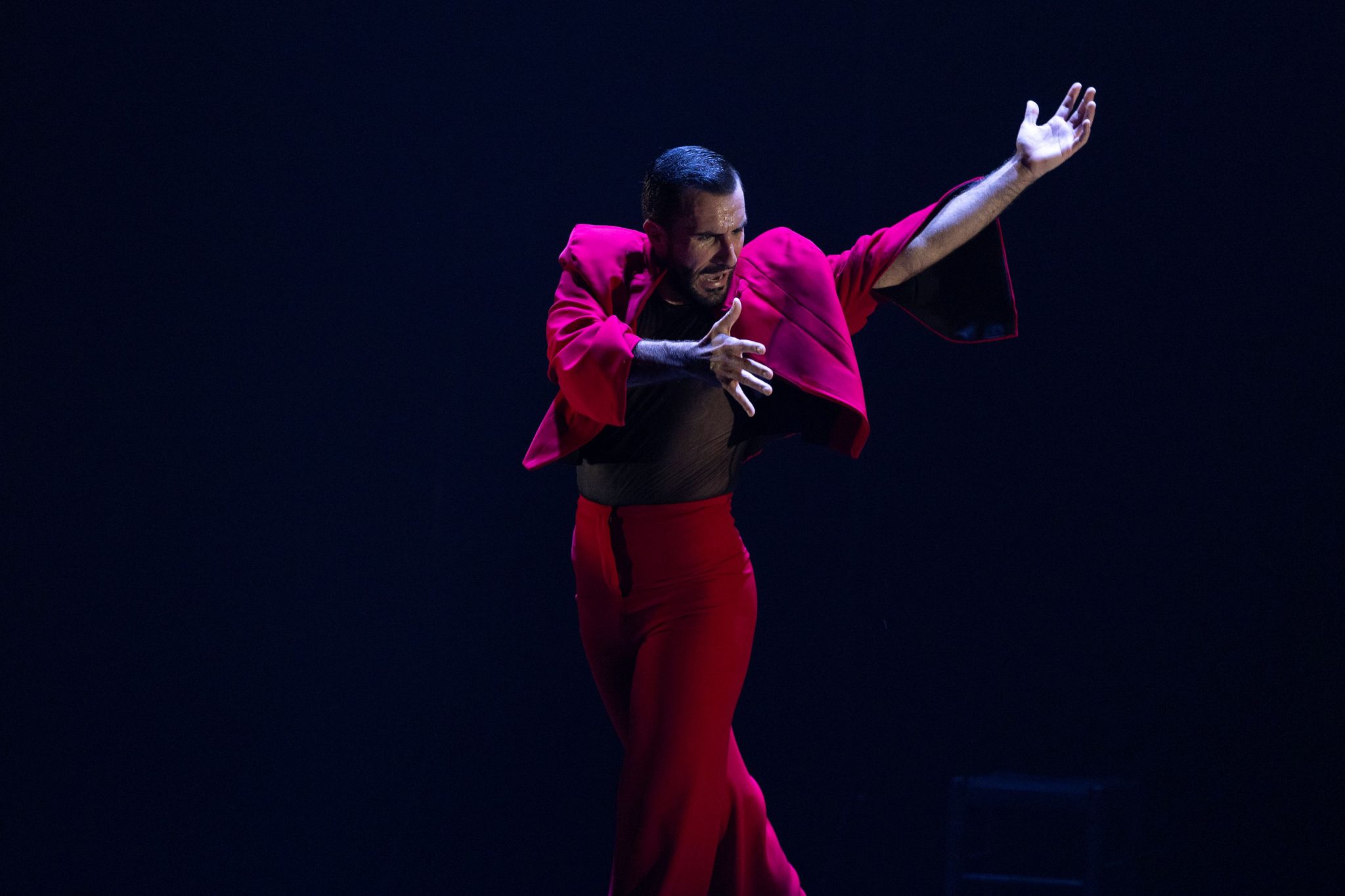 Photo by Ana Palma
His preeminence on the world stage is underscored by the fact that this is the second time in two years that Begoῆa Fernandez Pellicer, director of Spain Flamenco Arts, has chosen to feature Ramírez on a U.S. tour. Pellicer is working with the Honorary Consul of Spain and Chalita at Semilla Flamenca school to bring him to Bellevue. Through these collaborations, local students with Semilla Flamenca have the special honor to take classes with international masters including Ramírez and Barcelona-based José Moldanado earlier this year.
Ramírez is grateful to the American audience because these tours further boost his career and reputation in Spain where he is able to make a comfortable living as a professional dancer—an enviable testament of the support of the arts in Europe.
For Ramírez, flamenco is something that is true. Each time he performs Chronicle it morphs depending on what the audience projects back. In this way, Ramírez will carry Seattle back to Spain in a way that is untouchable by visas or borders.
Get your tickets to see Rafael Ramírez perform Crónica de un Suceso on Friday, October 24th at the Medydenbauer Theatre. View teaser here.


